
You don't have to choose Western or Eastern medicine.
Dr. Boguslavsky is one of the few physicians in New Jersey board-certified in both Family Medicine and Medical Acupuncture — so you get both, from one provider who already knows your health history.
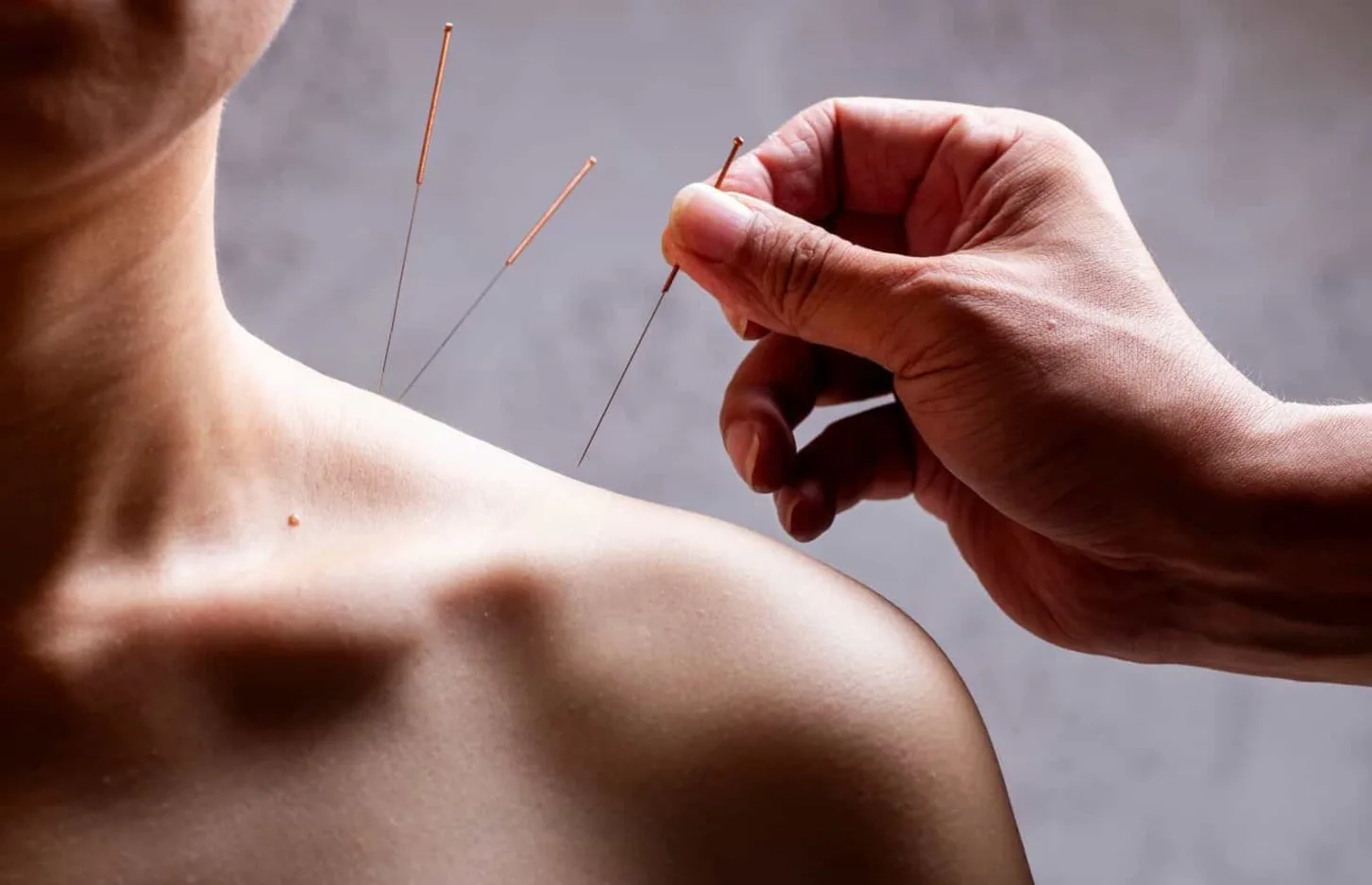
What is medical acupuncture?
Medical acupuncture is a therapeutic approach based on traditional Chinese-medicine principles, practiced by physicians trained in both Western and Eastern medicine. Unlike traditional acupuncturists who focus solely on Chinese-medicine theory, medical acupuncture integrates evidence-based Western diagnosis with acupuncture treatment.
At PremierMD you get something rare: a board-certified family-medicine physician who understands your condition through both medical and holistic lenses — diagnosing with conventional medicine, then treating with acupuncture, medication, lifestyle changes, or a combination that works best for your body.
What makes our approach different:
- Board-certified physician performing your treatment, not a technician
- Covered by most insurance plans and Medicare — rare for acupuncture
- Integrated with your primary-care team for complete health management
- Evidence-based approach combining ancient wisdom with modern medicine
Explore specialized acupuncture care
We offer focused programs for specific concerns, each led by the same board-certified physician.
Medical acupuncture conditions we treat
Pain Management
Chronic headaches & migraines, lower-back pain & sciatica, neck & shoulder pain, TMJ, fibromyalgia, arthritis, carpal tunnel, sports injuries.
Stress, Anxiety & Sleep
Anxiety, chronic stress and burnout, insomnia and disrupted sleep, and the physical tension that comes with them. Used alongside — not instead of — care for depression and other conditions that need medical treatment.
Women's Health
Perimenopausal symptoms, PMS & menstrual cramps, fertility support, pregnancy-related discomfort.
Digestive & Respiratory
IBS, constipation, nausea, asthma & allergies, sinusitis, smoking-cessation support.
Neurological
Bell's Palsy, post-stroke weakness, neuropathy, carpal-tunnel syndrome.
Other / Immune Support
Cancer-treatment side effects, sexual dysfunction, chronic fatigue, general immune support.
Don't see your condition listed? Call us — acupuncture helps with many concerns, and we'll let you know if it's right for you.
What actually happens at a session
Most people picture acupuncture and imagine something either mystical or uncomfortable. In practice it's a straightforward clinical visit — an exam, a plan, then a quiet half hour on the table. Here's the whole sequence:
- A real medical evaluation first (30–60 minutes). Your history, your medications, your exam findings, and any imaging or labs already done — the same workup you'd get for any other complaint, because the physician treating you is also a family doctor.
- A working diagnosis, in plain English. We tell you what we think is driving the problem and whether acupuncture is a good fit, a partial fit, or the wrong tool.
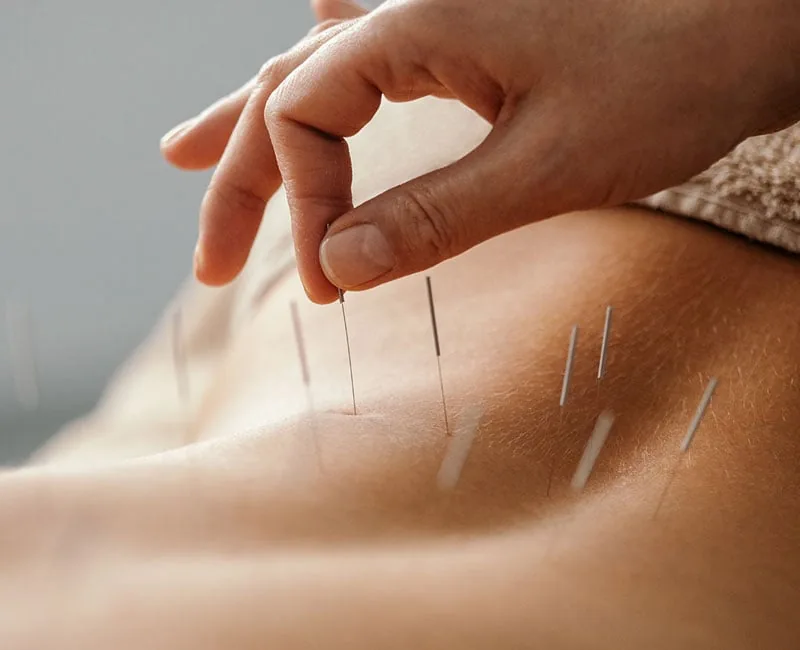
- Needle placement. Single-use, sterile, hair-thin needles — far thinner than the needle used for a blood draw. Most patients feel a brief pinch or nothing at all.
- 20–30 minutes of rest with the needles in place. The lights go down and you're left to relax. A fair number of patients fall asleep.
- A course, not a one-off. Acute problems often respond in 3–5 sessions; long-standing ones usually need 8–12. We reassess at the 4–6 visit mark and change course if you're not improving.
- Everything stays in one chart. Your acupuncture treatment, prescriptions, labs, and referrals all live with the same practice — nobody is guessing about what someone else already tried.
Get both Western and Eastern medicine, from one doctor.
Same-day sessions available — call or book online.
Where to get acupuncture: our Bridgewater office
Medical acupuncture is offered at our Bridgewater office, 757 Route 202-206, Suite 104, Bridgewater, NJ 08807. It is the only one of our four offices that offers acupuncture, so if you usually see us in Nutley, Hoboken or Morristown, book your acupuncture visits in Bridgewater.
- Hours: Monday–Thursday 7:45 AM–5:00 PM, Friday 8:00 AM–2:00 PM, Saturday by appointment. Call (908) 450-7002 for acupuncture appointment times.
- Parking: ample free parking in the building lot, including handicap-accessible spaces.
- Getting there: some GPS apps send you about two miles past us on Route 202-206; the Bridgewater office page has directions that avoid it.
Where the evidence is strongest — and where it isn't
Here's where acupuncture has the best track record, rather than a sales pitch that it cures everything. Some uses are well supported enough that Medicare and most commercial plans pay for them; others are reasonable to try but shouldn't replace medical treatment.
Best-supported uses
Chronic low-back pain, neck and shoulder pain, knee osteoarthritis, migraine and tension-headache prevention, and chemotherapy-related nausea. Medicare specifically covers acupuncture for chronic low-back pain.
Good supporting evidence
Anxiety and stress, insomnia, menstrual pain, myofascial pain, and menopausal hot flashes as an add-on to other treatment — areas where patients frequently report real, measurable improvement.
Reasonable as an add-on
Digestive complaints such as IBS, allergy and sinus symptoms, neuropathy, and post-stroke recovery — worth trying alongside standard care, with a clear point at which we reassess.
Not a substitute
Acupuncture does not treat depression, high blood pressure, or diabetes. Those need real medical management — which we also provide, so nothing falls through the cracks.
If you don't notice meaningful change after four to six treatments, we say so and change the plan — whether that means trigger point injections, medication, imaging, or a referral. Acupuncture is one tool on the bench, not the whole answer.
Other integrative care under the same roof
Cupping Therapy
Suction cups that lift and decompress tight tissue — frequently done in the same visit as acupuncture for stubborn muscle tension.
Learn moreChinese Herbal Medicine
Custom formulas prescribed by a physician who checks them against your current medications first.
Learn moreTrigger Point & Joint Injections
When a specific muscle knot or arthritic joint needs something more direct than needling alone.
Learn moreMedical acupuncture questions
What is medical acupuncture?
Medical acupuncture is a therapeutic approach based on traditional Chinese-medicine principles, practiced by a physician trained in both Western and Eastern medicine — integrating evidence-based medical diagnosis with acupuncture treatment, rather than acupuncture alone.
Is acupuncture covered by insurance?
Yes, in most cases — rare for acupuncture generally. Because treatment is performed by a board-certified physician, most insurance plans and Medicare cover it. We verify your coverage before your first visit.
Does acupuncture hurt?
Most patients say they barely feel the needles, which are hair-thin. You might feel a brief pinch, but it shouldn't hurt — many patients find treatment relaxing enough to fall asleep.
How many treatments will I need?
It depends on your condition. Acute issues may improve in a few sessions; chronic conditions typically need a longer course of treatment. We build a personalized plan and adjust it based on your response.
What conditions does acupuncture actually have good evidence for?
The strongest evidence is for chronic low-back pain (the reason Medicare covers it), neck and shoulder pain, knee osteoarthritis, migraine and tension-headache prevention, and chemotherapy-related nausea. There's also good support for anxiety, stress, insomnia, menstrual pain, and (as an add-on to other treatment) menopausal hot flashes. It is not a treatment for depression, high blood pressure, or diabetes — we'll say so rather than let you spend months on the wrong treatment.
What happens at my first visit?
Your first appointment runs 30–60 minutes and starts as a normal medical visit: history, medications, exam, and a review of any imaging or labs you've already had. Only then do we decide whether acupuncture fits, and place needles. You'll rest with them in for 20–30 minutes, then leave with a plan for how many sessions to expect and when we'll reassess.
Are the needles safe?
Yes. We use sterile, single-use, disposable needles that are discarded after every treatment. Side effects are uncommon and minor — usually brief soreness or a small bruise at a needle site. Because your treating physician is board-certified in family medicine, anything you're taking that raises bleeding risk, and any implanted device, is accounted for before a single needle goes in.
Contact PremierMD Today
We'll reach out within one business day to answer your questions and help you schedule an appointment.