What is cupping therapy?
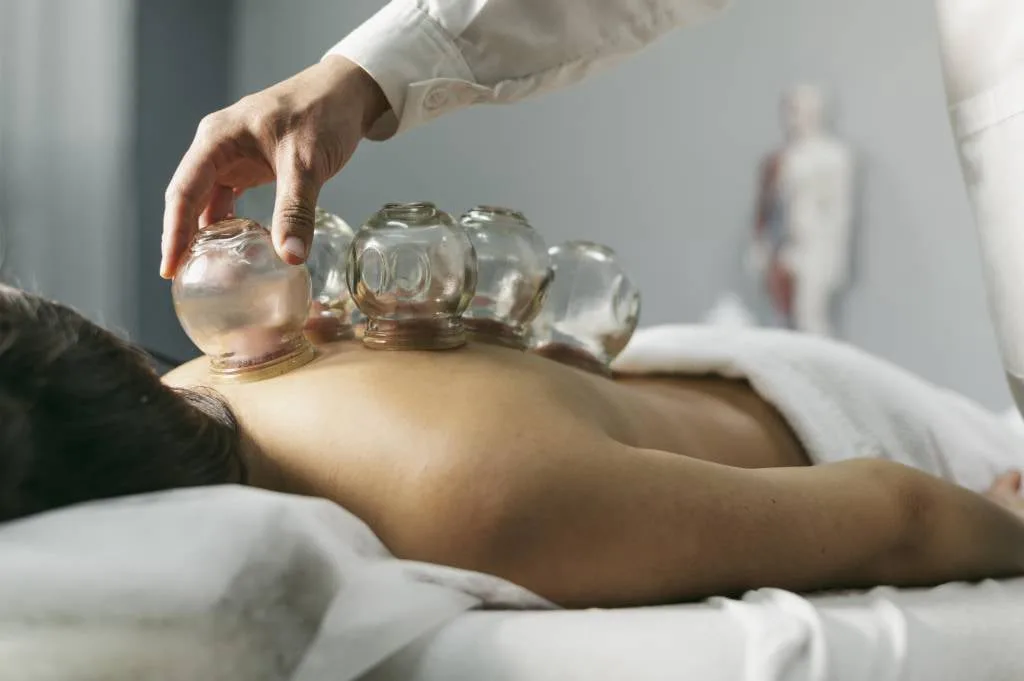
Cupping therapy is an ancient healing practice that uses suction cups placed on your skin to increase blood flow, reduce muscle tension, and promote healing. The cups create negative pressure that draws blood to the surface, helping your body release toxins and repair damaged tissue.
You've probably seen the circular marks — Michael Phelps made them famous at the Olympics. But cupping isn't only for athletes. It's been used for thousands of years in traditional Chinese medicine for pain, inflammation, respiratory complaints, and digestive issues, and it works differently from massage: rather than pressing into the muscle, cupping lifts tissue upward and outward, decompressing fascia and drawing fresh blood into areas that have been tight and poorly perfused for months.
Cupping works even better when combined with acupuncture, Chinese herbal medicine, or physical therapy — we create comprehensive plans that address your condition from multiple angles.
What to expect
Appointments are scheduled for 30–60 minutes depending on how many areas we're treating, so you're never rushed. The cups themselves stay in place 5–15 minutes. Placement is deliberate, your comfort is checked throughout, and suction is adjusted to your response.
What we treat with cupping
Cupping is best known for muscular pain, but it's used across a wider range than most patients expect — usually as one part of a plan rather than the whole of it.
Muscle Pain & Tension
Back, neck, and shoulder pain, tight muscles, stubborn knots, and chronic tension that returns every time you sit at a desk for a week.
Sports Injuries & Recovery
Strains, sprains, overuse injuries, and delayed-onset muscle soreness — the reason you see cup marks on competitive athletes.
Chronic Pain Conditions
Fibromyalgia, arthritis pain, myofascial pain syndrome, and the trigger points that also respond to injection.
Headaches
Tension headaches, cervicogenic headaches originating in the neck, and migraine prevention as part of a broader plan.
Respiratory Complaints
Chest congestion, chronic cough, bronchitis, and asthma symptoms — a traditional use of cupping over the upper back, used alongside your prescribed inhalers, not instead of them.
Digestive Issues
Bloating, indigestion, and constipation, when abdominal cupping is appropriate for your case.
Circulation & Swelling
Poor blood flow, sluggish lymphatic drainage, and post-surgical swelling once a surgeon has cleared you.
Stress-Related Tension
Physical tension from stress, difficulty relaxing, and sleep problems driven by muscular tightness — often paired with acupuncture for stress.
Don't see your condition listed? Call (908) 450-7002 — we'll tell you honestly whether cupping is a reasonable option for it.
The techniques we use — and what a session is like
"Cupping" covers several different techniques, and which one you get depends on what we're treating. There's no single procedure that gets applied to everybody:
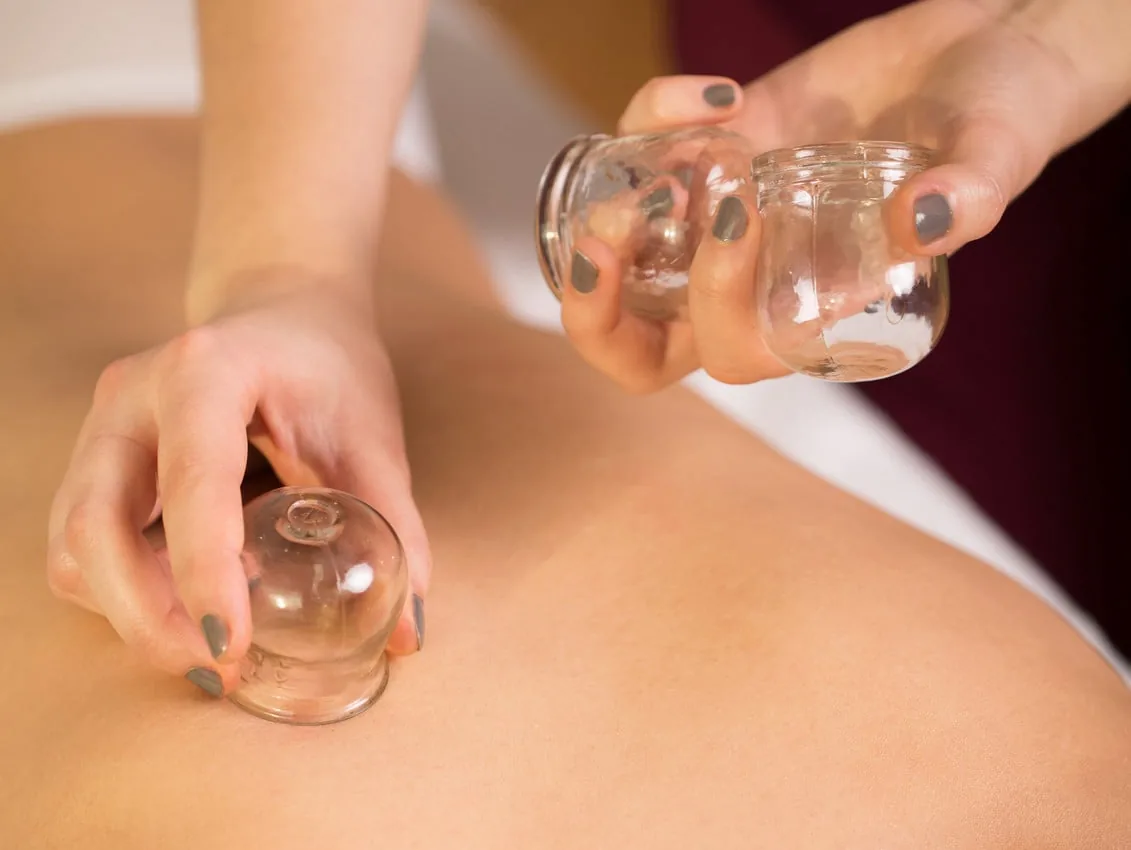
- Static (dry) cupping: cups placed and left in position for 5–15 minutes over a specific tight area. This is the technique that leaves the classic circular marks.
- Flash cupping: cups applied and removed rapidly in sequence, a gentler option for sensitive areas or a first session.
- Combined with acupuncture: many patients have both in the same visit — needles for the specific points, cups for the surrounding tissue.
- Afterward: the marks are not bruises. They're blood drawn toward the surface, they don't hurt, and they fade in 3–7 days. Darker marks generally mean more stagnation was present in that area.
- The course: acute problems often settle in 1–3 sessions; chronic pain and long-standing tension typically take 6–10 for lasting change.
Let your muscles finally relax.
Same-day sessions available — call or book online.
Why choose MyPremierMD for cupping therapy
Board-Certified Expertise
Board-certified in medical acupuncture and trained in traditional cupping techniques, combining Eastern healing principles with Western medical science.
Integrated Treatment Plans
Cupping works even better combined with acupuncture, herbal medicine, or physical therapy for a comprehensive plan.
Time for Healing
Sessions run 30–60 minutes so you're never rushed, with suction and technique adjusted to your comfort and your response.
Insurance May Cover It
When combined with acupuncture, many insurance plans cover cupping therapy. We verify your coverage and handle the billing.
Treatments frequently paired with cupping
Cupping rarely goes it alone. These are the treatments most often combined with it — all provided by the same practice, often in the same appointment.
Medical Acupuncture
Needling for specific points alongside cups for the surrounding tissue — the most common pairing, and the one that makes insurance coverage likely.
Learn moreTrigger Point Injections
For a knot that keeps coming back after cupping releases it, a targeted injection can break the cycle in a single visit.
Learn moreChinese Herbal Medicine
Internal support for pain, inflammation, and recovery, prescribed by a physician who checks it against your current medications.
Learn moreCupping therapy questions
Does cupping hurt?
Most patients describe cupping as a pulling sensation rather than pain. You might feel tight at first, but it usually becomes comfortable as your muscles relax. Suction pressure is adjusted based on your comfort level and the treatment area.
What about those circular marks — will I get bruises?
The circular marks are not bruises — they are caused by blood being drawn to the surface. They are painless and typically fade within 3–7 days. The darker the mark, the more stagnation was present in that area.
How long does a cupping session take?
Plan on 30–60 minutes for the appointment, depending on how many areas we're treating. The cups themselves stay in place 5–15 minutes — the rest of the visit is evaluation, positioning, and time to rest afterward. Flash cupping may be used instead, depending on your condition.
How many treatments will I need?
This depends on your condition. Acute injuries may improve after 1–3 sessions. Chronic pain or long-standing tension typically requires 6–10 treatments for lasting results.
How is cupping different from a deep-tissue massage?
The direction of force. Massage presses down into the muscle; cupping lifts tissue upward and outward. That decompression is better at separating layers of fascia that have become stuck together and at pulling fresh blood into an area that's been chronically tight. Neither replaces the other — but if massage has helped only briefly, cupping is worth trying because it's doing something mechanically different.
Is there anyone who shouldn't have cupping?
Yes, and this is a real reason to have it done by a physician. We avoid cupping over broken or infected skin, sunburn, active rashes, recent surgical sites, and areas of known blood clot. We're cautious with patients on blood thinners or with bleeding disorders, with fragile skin, and with poorly controlled diabetes. During pregnancy, the abdomen and low back are avoided. Your medication list and medical history are reviewed before the first cup goes on.
Will insurance cover it?
Often, when cupping is performed as part of a medical acupuncture treatment by a board-certified physician — which is how it's usually done here. Coverage varies by plan, so we verify your benefits before your first appointment and tell you what to expect out of pocket rather than surprising you afterward. See our insurance and billing page for the carriers we work with.
Contact MyPremierMD Today
We'll reach out within 24 hours to answer your questions and help you schedule an appointment.