

How acupuncture settles the stress response
Anxiety isn't only a thought problem. It lives in the body — a jaw that's clenched by noon, shoulders up around your ears, a stomach that won't settle, and a nervous system that never quite comes off high alert. That's the part acupuncture can reach.
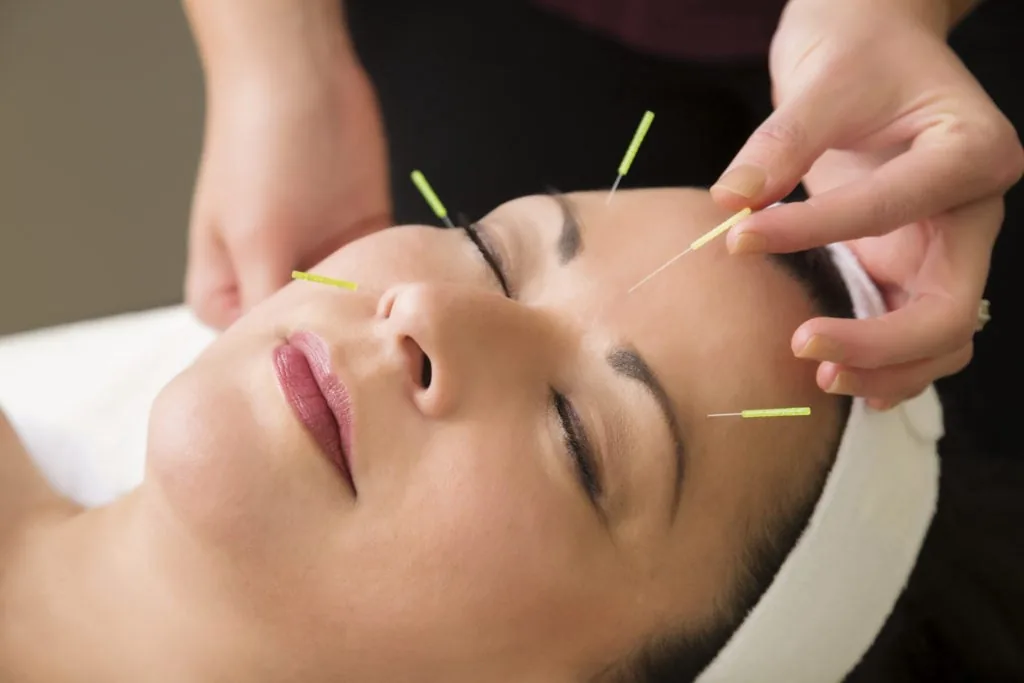
Needling specific points shifts the balance between the sympathetic ("fight or flight") and parasympathetic ("rest and digest") branches of your autonomic nervous system, and is associated with lower circulating stress hormones such as cortisol. In practice, that tends to show up first as better sleep and less physical tension — and only then as the worry itself losing some of its grip.
What we won't tell you is that this replaces treatment. Acupuncture is a good adjunct for anxiety, stress, and insomnia. It is not a treatment for depression, and using it as one would mean leaving a real illness untreated.
Did you know?
Many insurance plans now cover medical acupuncture when it's provided by a licensed physician. We'll help verify your coverage before your first visit.
What we actually use it for
These are the concerns patients come to us with most often, and where acupuncture has the best track record as part of a broader plan.
Anxiety & Worry
Generalized anxiety, health anxiety, and the low-grade daily worry that never fully switches off. Often used with, or as an alternative to, daily medication — see our full anxiety care.
Chronic Stress & Burnout
The state of running on adrenaline for months — short fuse, no patience, wired but exhausted — where nothing is clinically "wrong" on paper but you feel nothing like yourself.
Insomnia & Broken Sleep
Trouble falling asleep, waking at 3 a.m. with a racing mind, or sleeping through the night and still waking unrefreshed. Sleep is usually the first thing patients notice improving.
The Physical Side of Stress
Tension headaches, jaw clenching and TMJ pain, neck and shoulder tightness, and stress-driven digestive upset — where the mind-body overlap is most obvious.
Where acupuncture fits — and where it doesn't
Plenty of clinics will tell you acupuncture treats depression. We won't. Here's how we draw the line:
- Good fit: anxiety, chronic stress, insomnia, and the physical tension that comes with them — either on its own for milder symptoms, or alongside medication and therapy.
- Good fit as support: the anxiety, poor sleep, and body tension that accompany depression — helpful for how you feel day to day, while the depression itself is treated properly.
- Not a fit: depression as the primary problem. That needs therapy, medication, and where those have failed, Spravato (esketamine) — which we've administered over 30,000 times.
- Not a fit: bipolar disorder, psychosis, or an active safety crisis. If you're in crisis, call or text 988 (Suicide & Crisis Lifeline) or go to your nearest emergency room.
- Checked either way: anxiety symptoms sometimes turn out to be a thyroid problem, a medication side effect, or a sleep disorder. We run those labs rather than assuming the cause is psychological.
- Reassessed on a schedule: we set a checkpoint at four to six sessions. If it isn't helping, we change the plan instead of booking more of the same.
You don't have to just white-knuckle through it.
Same-day sessions available — call or book online.
Why patients choose us for this
Board-Certified Physician
Dual board-certified in Family Medicine and Medical Acupuncture, trained at UCLA's Helms Medical Institute — not a technician working from a protocol.
Insurance Coverage
Many insurance plans cover medical acupuncture when it's provided by a physician. We verify your coverage before treatment rather than leaving you to find out afterward.
Extended Sessions
Appointments run 30–45 minutes, giving you time to actually decompress and let the treatment work. Nobody is standing in the doorway.
The Rest of the Plan Too
If acupuncture isn't enough, the same practice provides mental health care, medication management, and Spravato for treatment-resistant depression — no starting over elsewhere.
If you need more than acupuncture
All of it happens in the same practice, with the same chart — so choosing acupuncture never means giving up access to anything else.
Mental Health Care
Diagnosis, medication management, and coordinated counseling from a team that includes a dedicated psychiatric PA.
Learn moreSpravato for Depression
FDA-approved esketamine for treatment-resistant depression, with over 30,000 treatments administered across our offices.
Learn moreChinese Herbal Medicine
Formulas for sleep and stress support, prescribed by a physician who checks them against everything else you're taking.
Learn moreAcupuncture for anxiety & stress: common questions
Does acupuncture really work for anxiety?
For anxiety and stress, yes — studies show acupuncture can ease anxiety, and many patients report less physical tension and better sleep within 3–5 sessions. We're more careful about depression: acupuncture is not a treatment for depression, and we use it there only as support for the stress, anxiety, and poor sleep that often travel with it, alongside real depression treatment.
Can acupuncture treat my depression?
Not on its own, and we won't tell you otherwise. Depression needs actual treatment — therapy, medication, and for treatment-resistant depression, Spravato. What acupuncture can help with is the anxiety, muscle tension, and insomnia that so often come with depression, which is why we offer it as one part of a plan rather than a replacement for one. If depression is your main concern, start with our depression care page.
Can I continue my antidepressant or anti-anxiety medication?
Yes — and you shouldn't stop or change any psychiatric medication because you've started acupuncture. Acupuncture is used alongside medication, not as a reason to come off it. Any dose change is a decision made deliberately with your prescriber based on how you're actually doing.
Is acupuncture covered by my insurance?
Many insurance plans now cover medical acupuncture for mental health conditions when provided by a licensed physician. We verify your coverage before your first visit.
Does the treatment hurt?
Most people feel minimal discomfort. The needles are hair-thin and inserted very shallowly. Many patients relax or even fall asleep during the 20–30 minute session.
What qualifications does the treating physician have?
Dr. Boguslavsky is board-certified in Family Medicine and Medical Acupuncture, trained at UCLA's Helms Medical Institute. This dual certification means your care combines evidence-based Western medicine with time-tested Eastern techniques. Meet the team.
How often should I get acupuncture for anxiety, and how many sessions?
Plan on weekly sessions for the first four to six weeks. Most patients who respond notice something within the first three to five visits — usually sleeping better or feeling less physically wound up before they notice the worry itself easing. If nothing has changed by the sixth session, we say so and change the plan rather than booking you indefinitely.
What if acupuncture isn't enough on its own?
Then we treat what it isn't reaching. The same practice provides mental health care, medication management, Chinese herbal medicine, and Spravato for treatment-resistant depression — and we screen for physical causes of anxiety-like symptoms, such as thyroid disease. Nothing has to be re-explained to a new provider.
Contact PremierMD Today
We'll reach out within one business day to answer your questions and help you schedule an appointment.