
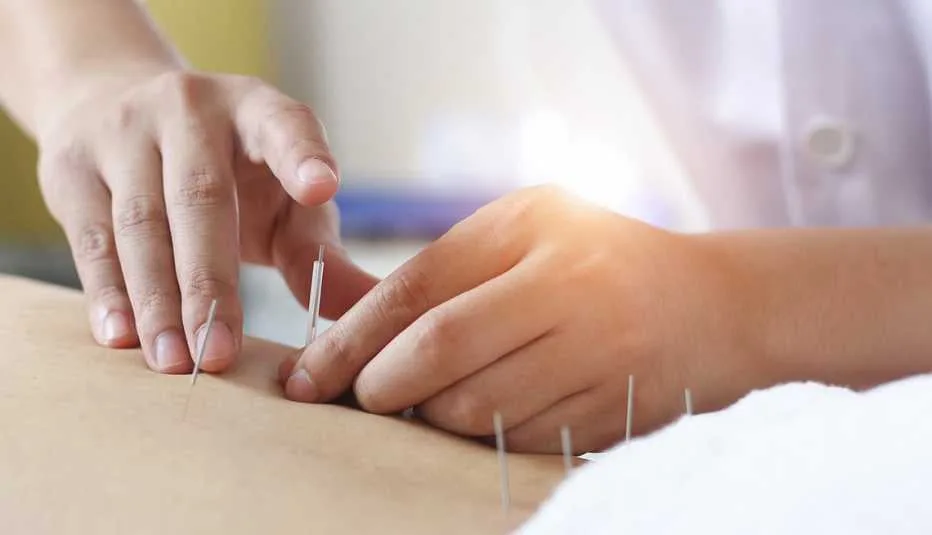
Pain conditions we treat with acupuncture
Headaches & Migraines
Chronic headaches, tension headaches, migraines, and cluster headaches — many patients find relief when medications haven't worked.
Back & Neck Pain
Chronic low-back pain, upper-back pain, neck pain, and sciatica. Medicare covers acupuncture for chronic low-back pain.
Joint Pain
Arthritis (osteo & rheumatoid), knee, hip, and shoulder pain, TMJ disorders, ankle and foot pain.
Muscle Pain
Fibromyalgia, muscle tension, myofascial pain syndrome, chronic spasms, and sports injuries.
Nerve Pain
Sciatica, carpal tunnel syndrome, neuropathy, post-surgical nerve pain, and post-herpetic neuralgia.
Sports Injuries
Tennis elbow, rotator-cuff injuries, plantar fasciitis, shin splints, muscle strains, and tendonitis.
Don't see your condition listed? Call (908) 450-7002 — acupuncture helps many types of chronic pain and we'll let you know if it's right for you.
Why needles help a pain problem
Acupuncture isn't a placebo ritual and it isn't magic. Placing a needle in a specific tissue produces measurable physical effects — and those effects are why it works better for some pain problems than others.
It changes the pain signal
Needling stimulates nerve fibers that trigger release of the body's own endorphins and modulate how pain signals are processed before they reach the brain — the same pathway that makes rubbing a stubbed toe help.
It releases the muscle itself
A needle placed into a taut band produces a local twitch response that lets the muscle let go. This is why acupuncture and trigger point injections often target the same knots.
It restores blood flow
Local circulation increases around the treated tissue, which matters most in chronically tight, poorly perfused areas — the upper trapezius, the lumbar paraspinals, plantar fascia.
It lowers the medication load
Many patients are able to reduce how often they reach for anti-inflammatories or muscle relaxers. Because a physician is prescribing and treating, those changes are made deliberately, not by guesswork.
Stop living around your pain.
Same-day sessions available — call or book online.
How we work out what's actually hurting
Chronic pain gets treated badly when nobody stops to figure out where it's coming from. A shoulder that hurts because of a rotator cuff tear needs something different from a shoulder that hurts because the neck is referring pain into it — and needles in the wrong place won't fix either. Your first visit is a real diagnostic workup:
- The full history. When it started, what makes it better and worse, what's already been tried, and what it's stopping you from doing.
- A hands-on exam. Range of motion, strength, nerve testing where it's relevant, and palpation to find the taut bands and tender points that reproduce your pain.
- Reviewing what already exists. Prior MRIs, X-rays, physical therapy notes, and injection records — so we're not starting from zero or repeating something that already failed.
- Screening for what isn't musculoskeletal. Some pain has a medical cause — an inflammatory arthritis, a thyroid problem, a neuropathy from uncontrolled diabetes. As a family medicine practice, we can order the labs and act on them the same week.
- Red flags taken seriously. Progressive weakness, numbness in the saddle area, unexplained weight loss, or fever with back pain means imaging and a specialist referral — not a course of acupuncture.
- A stated checkpoint. We tell you up front how many sessions before we expect a change, so "keep coming back" never becomes the default answer.

If acupuncture isn't enough on its own
Everything below happens in the same practice, from the same team — so switching or stacking treatments doesn't mean starting over with a new provider.
Trigger Point Injections
For a specific muscle knot that keeps coming back, a targeted injection can break the cycle in a single five-minute visit.
Learn moreJoint Injections
Corticosteroid or plant-based Traumeel injections for arthritic knees, shoulders, and hips that need more than soft-tissue work.
Learn moreCupping Therapy
Decompresses broad areas of tight fascia across the back and shoulders — often added to the same appointment as your needling.
Learn moreLong-standing pain frequently travels with something else — poor sleep, weight that's hard on the joints, or a chronic condition that hasn't been well controlled. Those get addressed too, through chronic disease management and weight management, rather than left for someone else to deal with.
Acupuncture for pain: your questions answered
Does acupuncture hurt?
Most patients say they barely feel the needles. The needles are hair-thin — much thinner than needles used for shots or blood draws. You might feel a tiny pinch, but it shouldn't hurt. Many patients actually fall asleep during treatment.
How many treatments will I need?
It depends on your condition and how long you've had it. Acute injuries might feel better after 3–5 treatments. Chronic pain that's been around for years usually needs 8–12 treatments for significant improvement.
Is acupuncture covered by my insurance?
Many insurance plans now cover medical acupuncture for chronic pain, especially when performed by a licensed physician. Medicare covers acupuncture for chronic low back pain. We verify your coverage before your first appointment.
How long does each treatment take?
Your first visit takes 30–60 minutes because we do a comprehensive evaluation. Follow-up treatments typically take about 45 minutes total, including 20–30 minutes of rest with needles in place.
Can I combine acupuncture with my pain medications?
Absolutely. Many patients are able to reduce their pain medication dosages as acupuncture starts working. Because your provider is a board-certified physician, we coordinate everything to create the safest, most effective treatment plan.
What if acupuncture doesn't work for me?
Acupuncture works for most people with chronic pain, but it's not magic. If you don't see improvement after 4–6 treatments, we'll reassess — we have other pain management tools available, including trigger point injections, joint injections, and medication.
How is this different from dry needling at physical therapy?
Dry needling uses similar needles but targets myofascial trigger points specifically, based on a musculoskeletal exam. Medical acupuncture draws on both that anatomical approach and traditional Chinese-medicine point selection — and, more importantly here, it's performed by a board-certified physician who can also order imaging, adjust your medications, run labs, and inject a joint if that turns out to be what you actually need. The two aren't rivals; the difference is what your provider is licensed to do when needling isn't the answer.
How soon should I expect to feel something?
Some patients feel looser and less sore the same afternoon. More commonly, relief builds over the first three to five sessions and lasts progressively longer between visits — that lengthening gap is the clearest sign treatment is working. Pain that's been present for years rarely resolves in one visit, and anyone who promises that isn't being straight with you.
Contact MyPremierMD Today
We'll reach out within 24 hours to answer your questions and help you schedule an appointment.