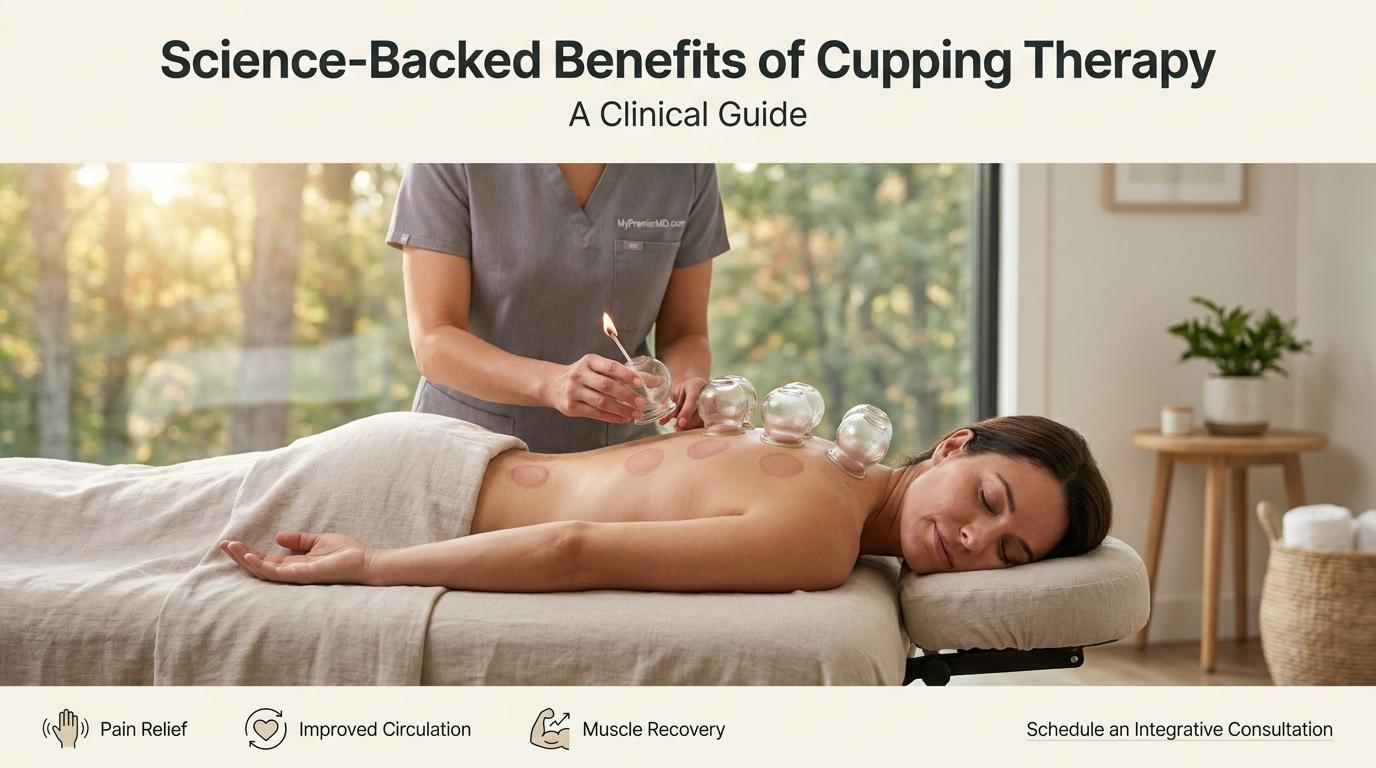
Cupping therapy is an integrative medical treatment that utilizes suction to create negative pressure on the skin and underlying tissues. By drawing blood to a localized area, this practice stimulates circulation and initiates a natural healing response within the soft tissues.
This guide examines the physiological mechanisms behind the treatment, evaluates current clinical evidence regarding its efficacy for pain and recovery, explores how it impacts inflammation, compares common methods like dry and wet cupping, details essential safety protocols, and outlines how patients can prepare for a session as part of a holistic approach to care.
The Physiological Mechanism of Cupping Therapy
What is Cupping Therapy?
Cupping therapy is an ancient therapeutic practice that involves placing specialized cups on the skin to create suction, which draws underlying tissues upward to promote healing, increase circulation, and alleviate pain. While its roots trace back to traditional Eastern medicine, it has become a cornerstone of modern integrative care for managing musculoskeletal issues and chronic tension. At PremierMD, we integrate these techniques into our comprehensive treatment plans, offering professional cupping therapy services to help patients achieve optimal physical recovery.
How Does the Suction Affect Tissues?
The primary mechanism that distinguishes cupping from other manual therapies, such as massage, is the use of negative pressure. While most bodywork involves applying positive pressure (pressing down on tissues), cupping creates a vacuum that pulls the skin, fascia, and superficial muscle layers upward.
This suction force leads to several physiological changes:
- Fascial Decompression: The vacuum lifts the connective tissue (fascia), creating space between the skin and the muscle. This helps resolve adhesions or “knots” that restrict movement.
- Micro-trauma and Immune Response: The suction creates a localized, controlled micro-trauma. This signals the body’s immune system to increase the production of cytokines—small proteins that regulate the healing process.
- Nervous System Regulation: The gentle pulling sensation can stimulate the parasympathetic nervous system, promoting a state of deep relaxation and reducing the “fight or flight” response often associated with chronic pain.
Mechanical Stimulation of Blood Flow
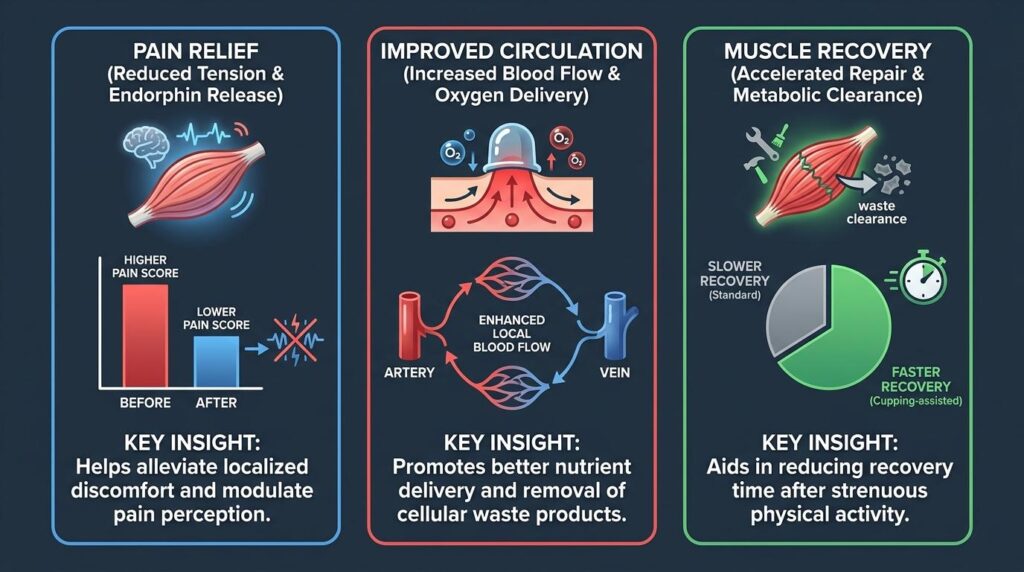
One of the most significant cupping therapy benefits is the rapid induction of local hyperemia, or increased blood flow to the treated area. When the cup creates a vacuum, it causes the blood vessels (capillaries) to dilate, a process known as vasodilation.
This mechanical stimulation of blood flow serves three critical functions:
- Oxygenation and Nutrient Delivery: By pulling fresh, oxygenated blood into stagnant or ischemic (oxygen-deprived) tissues, cupping provides the necessary nutrients for cellular repair.
- Waste Removal: The increased circulation helps the lymphatic system flush out metabolic waste products, such as lactic acid, which can accumulate in muscles after intense exercise or due to poor posture.
- Endothelial Function: Research suggests that the mechanical stress of cupping may stimulate the endothelial cells (the lining of blood vessels) to release nitric oxide, a potent vasodilator that further improves systemic circulation.
The visible marks often left behind—frequently mistaken for bruises—are actually a result of this intense blood flow and the rupture of tiny superficial capillaries. This process, known as ecchymosis, is a therapeutic sign that the body is actively clearing stagnation and initiating a regenerative response.
Clinical Effectiveness and Proven Benefits of Cupping
Does Cupping Therapy Really Work?
Yes, cupping therapy is an evidence-based clinical treatment that is highly effective for reducing localized pain and promoting muscle recovery. When performed by trained medical professionals, it serves as a valuable tool for addressing myofascial tension and improving circulatory health.
Proven Benefits for Pain and Recovery
Cupping therapy offers a range of physiological advantages, particularly for those managing chronic pain or recovering from intense physical activity. By creating a vacuum-like suction, the treatment increases blood flow to the targeted area, which helps deliver essential nutrients and oxygen to damaged tissues.
Key benefits observed in clinical settings include:
- Myofascial Release: The suction helps to pull and stretch the fascia (connective tissue), reducing tightness and improving overall range of motion.
- Pain Modulation: By stimulating the nervous system, cupping is designed to encourage the release of natural pain-relieving chemicals, such as endorphins.
- Inflammation Management: The process encourages the movement of stagnant fluids, which is intended to help the body process and resolve inflammation more efficiently.
These therapeutic effects make cupping therapy a frequent recommendation for patients dealing with lower back pain, neck stiffness, and persistent muscle fatigue.
Scientific Validation of Integrative Care
Modern medical research continues to validate the role of cupping within a professional healthcare setting. The National Center for Complementary and Integrative Health (NCCIH) notes that while further study is ongoing, evidence supports cupping as a viable option for managing various types of chronic pain.
At our practice, we integrate these techniques into a broader family medicine framework. This integrative approach is designed to provide a more holistic recovery experience than conventional treatments alone. Rather than viewing it as a standalone “cure,” we use cupping as a strategic tool to support the body’s natural healing processes and enhance the efficacy of other rehabilitative efforts.
Physiological Impacts on Inflammation and Metabolic Waste
While the visual results of cupping therapy are often the most discussed, the true medical value lies in the profound physiological changes occurring beneath the skin. By utilizing negative pressure rather than the positive pressure of traditional massage, cupping affects the body’s soft tissue and circulatory systems in a way few other treatments can.
Managing Muscle Tightness and Inflammation
The suction created during a cupping session performs what is known as myofascial decompression. This process pulls the skin and superficial muscle layers upward, creating space between the fibers and the surrounding fascia. This mechanical “lift” breaks up adhesions and triggers a localized, controlled inflammatory response.
From a medical perspective, this “sterile inflammation” is beneficial. It recruits white blood cells, platelets, and other healing factors to the targeted area, effectively jumpstarting the body’s internal repair mechanisms. For patients suffering from chronic pain, this localized boost in circulation can resolve long-standing tightness that has become resistant to standard stretching or manual therapy.
Addressing the ‘Toxin’ Question
In popular culture, cupping is often marketed as a way to “suck out toxins.” To maintain medical accuracy, it is more precise to view this as the mobilization of metabolic waste.
When muscles are overused or injured, blood flow can become stagnant, allowing metabolic byproducts—such as lactic acid, uric acid, and cellular debris—to accumulate within the tissue. These byproducts contribute to the sensation of fatigue and soreness. The vacuum effect of cupping pulls these waste products from deep within the muscle tissue toward the surface. Once moved into the more superficial layers of the skin, these substances are more easily processed and eliminated by the lymphatic system. This systemic “housekeeping” is a core component of how cupping supports chronic disease management and overall physical recovery.
Systemic Relaxation and Nervous System Response
Beyond the physical manipulation of tissue, cupping therapy has a direct impact on the autonomic nervous system. The gentle, rhythmic application of the cups stimulates the sensory nerves in the skin, which sends signals to the brain to shift from a sympathetic (“fight or flight”) state into a parasympathetic (“rest and digest”) state.
This shift is often characterized by a slowed heart rate and increased digestive activity. By sedating the central nervous system, cupping can be an effective adjunctive treatment for patients managing mental health concerns, including stress and anxiety. The physical release of muscle tension provides a feedback loop to the brain, signaling that the body is no longer in a state of high alert.
Visual Signs of Physiological Progress
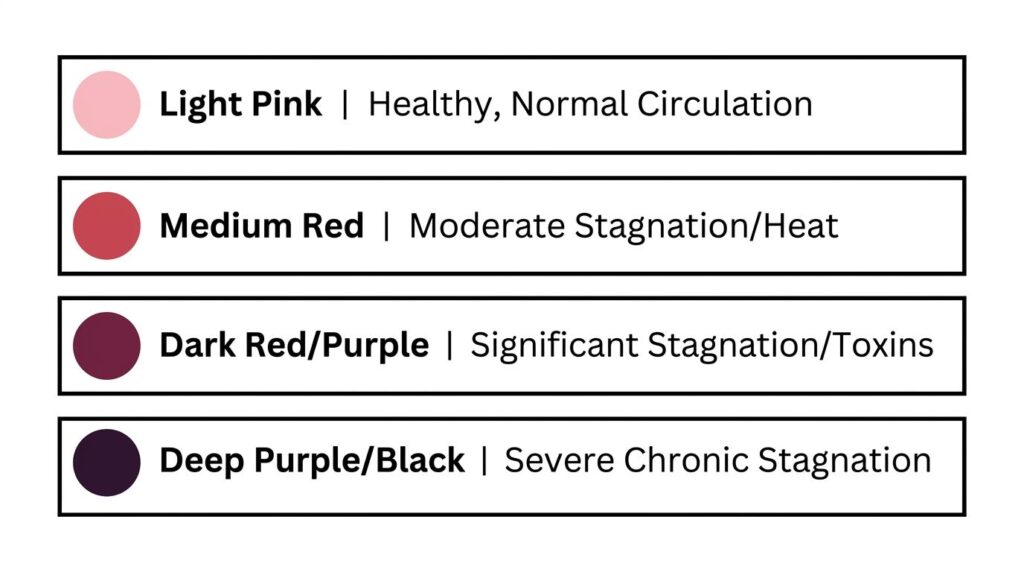
The circular marks left behind after a session, technically known as ecchymosis, are not bruises in the traditional sense of traumatic injury. Instead, they represent the “stagnation” being brought to the surface. The appearance of these marks provides clinical insight into the state of the underlying tissue:
- Light Pink or Red: Indicates healthy blood flow and minimal metabolic accumulation. These marks usually fade within a few hours to a couple of days.
- Deep Red or Purple: Suggests significant blood stagnation or a higher concentration of metabolic waste in the area. This is common in areas of chronic injury or severe muscle knots.
- Dark Blue or Blackish: Often seen in areas with older injuries or intense localized congestion. This indicates that the tissue requires more frequent “flushing” to restore optimal circulation.
- Painless Sensation: Unlike a bruise caused by a strike or fall, these marks are generally not tender to the touch, which confirms that the capillaries have released stagnant fluid rather than being damaged by trauma.
Differentiating Methods: Dry vs. Wet Cupping
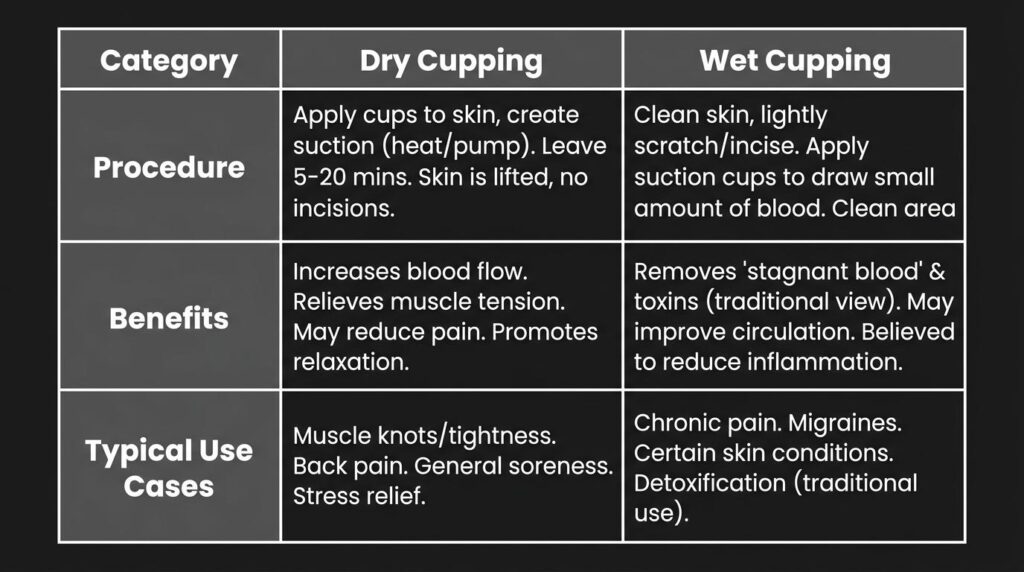
While the fundamental principle of cupping therapy involves creating a vacuum to manipulate soft tissue, the specific technique used can significantly change the therapeutic outcome. Understanding the differences between dry and wet cupping is essential for determining which method aligns with your health goals.
Dry Cupping vs. Wet Cupping
Dry cupping is the most common form practiced in Western clinical settings. It relies solely on suction to pull the skin and underlying muscle layer into the cup. This process expands blood vessels and increases circulation to the targeted area without breaking the skin.
Wet cupping, also known as Hijama, involves a two-step process. First, a mild suction is applied to the skin. The practitioner then makes tiny, superficial incisions before reapplying the cup to draw out a small amount of blood. This method is often sought for its purported detoxification benefits and its ability to clear inflammatory markers from the localized tissue.
| Feature | Dry Cupping | Wet Cupping (Hijama) |
| Procedure | Suction only; non-invasive. | Suction followed by small incisions and secondary suction. |
| Primary Goal | Relieve muscle tension, improve blood flow, and reduce pain. | Tissue “detoxification,” removal of stagnant blood, and systemic regulation. |
| Recovery | Temporary circular bruising (3–7 days). | Minor scabbing at incision sites; requires sterile aftercare. |
| Common Use Cases | Sports injuries, back pain, and trigger point release. | Chronic inflammatory conditions and traditional wellness rituals. |
Moving Cupping (Massage Cupping)
Moving cupping, or massage cupping, is a dynamic technique where the practitioner applies medical-grade oil or lotion to the skin before placing the cups. Once suction is established, the cups are gently glided across larger muscle groups, such as the back, thighs, or shoulders.
This method acts as a reverse deep-tissue massage. Instead of pressing down on the muscles, the suction pulls the tissue upward, which is exceptionally effective for breaking up deep myofascial adhesions and stimulating the lymphatic system. It is often integrated with medical acupuncture to provide a comprehensive approach to pain management.
Flash Cupping and Targeted Application
Flash cupping involves the rapid application and immediate release of cups in quick succession over a specific area. This repetitive “on-and-off” motion creates a pumping effect in the blood vessels.
- Purpose: This technique is primarily used to reduce local congestion and stimulate the “Qi” (energy) without leaving long-lasting marks.
- Targeted Application: Flash cupping is highly beneficial for patients with sensitive skin or those recovering from acute respiratory issues, as it can be applied over the lung meridians to help loosen phlegm and improve breathing.
Safety Protocols, Risks, and Medical Precautions
Is Cupping Therapy Safe?
Yes, cupping therapy is generally considered safe for most people when performed by a trained health professional in a clinical setting. Because it is a non-invasive technique, it carries a much lower risk profile than surgical interventions or pharmacological treatments. However, its safety depends heavily on the practitioner’s expertise and the use of sterile, high-quality equipment. According to the Cleveland Clinic Health Library, cupping may help ease chronic pain and improve circulation, but it should always be integrated into a broader medical plan overseen by your family medicine provider.
Does the Procedure Hurt?
While the idea of suction on the skin might seem intimidating, most patients find cupping therapy to be a relaxing experience. You may feel a tight, “pinching” sensation or a localized feeling of pressure as the vacuum is created inside the cup, but it should not be painful. At Premier Family Medicine, our practitioners adjust the suction levels based on your comfort and therapeutic needs. If you ever feel sharp pain or excessive heat, the cups can be adjusted or removed immediately.
Identifying Risks and Side Effects
The most common side effect of cupping is the distinctive circular marks left on the skin. While these may look like bruises, they are technically a result of blood being drawn to the surface (ecchymosis) and generally fade within a few days to a week.
Other potential risks and side effects may include:
- Skin sensitivity or mild soreness in the treated area.
- Dizziness or lightheadedness immediately following a session.
- Mild bruising that may be tender to the touch.
- Skin irritation if you have particularly sensitive skin or certain dermatological conditions.
Medical Contraindications
While cupping offers many benefits, it is not suitable for everyone. At our New Jersey offices, we conduct a thorough medical screening before beginning any cupping treatment to ensure it is appropriate for your health profile.
Cupping should generally be avoided or approached with extreme caution if you have:
- Bleeding disorders or are currently taking blood-thinning medications (anticoagulants).
- Active skin conditions, including eczema, psoriasis, or open wounds in the treatment area.
- Severe cardiovascular disease or recent heart failure.
- Deep vein thrombosis (DVT) or a history of blood clots.
- Cancer or are undergoing active oncological treatments.
- Pregnancy (specifically avoiding the abdomen and lower back regions).
- Organ failure, such as advanced kidney or liver disease.
If you are unsure if you are a candidate, we recommend scheduling a consultation with one of our family medicine experts to discuss your medical history and health goals.
The Patient Experience: Preparation and Aftercare
To get the most out of your cupping therapy benefits, it is important to prepare your body before your appointment and support your recovery afterward. At MyPremierMD, we focus on an integrated approach to ensure your treatment is both safe and effective.
Preparing for Your First Session
Proper preparation helps minimize sensitivity and allows your practitioner to achieve the best results. Follow these guidelines before you arrive:
- Hydrate well: Drink plenty of water throughout the day. Well-hydrated fascia and muscle tissue respond better to the suction of the cups.
- Eat a light meal: Avoid coming in on an empty stomach, but do not eat a heavy meal within two hours of your session.
- Wear loose clothing: You may need to expose the area being treated. Loose-fitting garments make it easier to get comfortable and avoid irritating the skin after the session.
- Avoid hair removal: Do not shave the treatment area immediately before your appointment, as this can increase skin sensitivity.
- Check your skin: Ensure the area is free of sunburns, open wounds, or active skin rashes.
What to Expect During and After
During your session, your provider will place specialized glass or silicone cups on specific points—often related to acupuncture meridians or areas of muscle tension.
During the treatment:
You will feel a tight, pulling sensation as the vacuum is created. While this may feel unusual at first, it should not be painful. Most patients find the sensation deeply relaxing as the tension begins to release.
After the treatment:
- Keep the area covered: Your pores will be open and your skin sensitive. Protect the treated area from cold, wind, and direct sunlight for at least 24 hours.
- Avoid intense heat: Skip the sauna, hot tub, or hot showers for the remainder of the day. Lukewarm water is best.
- Rest: Give your body time to process the metabolic waste released during the session. Avoid strenuous exercise for 12–24 hours.
- Hydrate: Continue drinking water to help your lymphatic system flush out the toxins released from your tissues.
Understanding Cupping Marks
One of the most common questions patients have is about the circular marks left behind. These are not bruises in the traditional sense; they are not caused by trauma. Instead, they are the result of “sha” or stagnation being drawn to the surface. The color of these marks provides valuable diagnostic information about your internal health.
| Mark Color | What It Indicates | Recovery Time |
| Light Pink / Red | Healthy blood flow; minimal stagnation. | 1–3 days |
| Moderate Red | Recent muscle tension or mild heat in the body. | 3–5 days |
| Deep Purple / Dark | Significant stagnation, old injury, or lack of circulation. | 7–10 days |
| Mottled / Pale | Potential “cold” or “deficiency” in the body’s energy. | 3–5 days |
| Blistering (Rare) | Significant dampness or extreme stagnation (rarely occurs with professional application). | Consult your provider |
Frequency of Treatment
The number of sessions you need depends on whether you are treating an acute injury or managing a chronic condition.
- For Acute Pain: You may benefit from 1–2 sessions per week for a short period until the symptoms subside.
- For Chronic Maintenance: Many patients find that once or twice a month is sufficient to keep muscle tension at bay and manage stress.
- Integration: Cupping is often most effective when paired with other services, such as trigger point injections or traditional family medicine care, to address the root cause of your discomfort.
Your provider at MyPremierMD will create a customized plan based on how your body responds to the initial treatment and the depth of the marks left behind.
The Intersection of Traditional Modalities and Family Medicine
Integrating ancient techniques like cupping therapy into a modern medical framework allows for a more comprehensive approach to your health. By combining the diagnostic precision of Western medicine with the restorative principles of Eastern traditions, you receive a care plan that addresses both immediate symptoms and long-term wellness.
Bridging Eastern and Western Medical Perspectives
The primary goal of family medicine is to view the patient as a whole person, rather than a collection of isolated symptoms. Eastern perspectives often focus on the movement of “Qi” (energy) and blood to resolve stagnation, while Western medicine identifies these same issues as myofascial restriction, localized inflammation, or poor circulation.
When you bridge these perspectives, you benefit from a dual-layered approach. For example, while your physician may use blood work or imaging to identify an underlying inflammatory condition, they may also recommend cupping therapy to physically decompress the affected tissue and stimulate the parasympathetic nervous system.
Cupping as a Complement to Conventional Care
Cupping is not meant to replace conventional treatments but to enhance their efficacy. In an integrative setting, this modality is often used alongside other evidence-based interventions to provide faster relief and reduce reliance on pharmaceuticals.
- Pain Management: Cupping can be paired with medical acupuncture or physical therapy to improve mobility and reduce the need for NSAIDs or opioid-based medications.
- Chronic Disease Support: For patients managing chronic stress or respiratory issues, cupping serves as a non-invasive tool to promote relaxation and improve thoracic expansion.
- Synergistic Healing: When used in conjunction with Chinese herbal medicine, cupping helps prepare the body to better utilize natural supplements by improving systemic circulation.
The Role of the Family Physician in Integrative Health
Your family physician serves as the clinical “anchor” for your integrative health journey. Having an MD oversee your cupping therapy ensures that the treatment is safe, appropriate for your medical history, and synchronized with your overall care plan.
Unlike visiting a standalone spa, receiving cupping within a family practice means your doctor is constantly screening for contraindications, such as blood-thinning medications, skin conditions, or active infections. Your physician monitors your progress, adjusting the frequency and intensity of the therapy based on your clinical outcomes. This oversight ensures that every session contributes directly to your broader health goals, providing a level of safety and clinical authority that only a board-certified medical team can offer.
Frequently Asked Questions About Cupping Therapy
Can I exercise immediately after a cupping session?
It is generally recommended to wait at least 24 hours before engaging in strenuous exercise. This recovery period allows your body to process the metabolic waste released during the session and gives the localized inflammatory response time to settle. Gentle movement or light walking is often fine, but intense activity can increase blood flow to the treated areas too quickly, potentially worsening soreness or skin marks.
Is cupping therapy covered by most insurance plans?
Insurance coverage for cupping varies widely depending on your specific plan and the provider performing the treatment. Some private insurers and HSA or FSA accounts cover the procedure when it is billed as part of a larger physical therapy or manual therapy protocol by a licensed physician. You should verify your benefits directly with your insurance carrier to see if they recognize specific CPT codes related to integrative care.
Can cupping help with respiratory issues like asthma or congestion?
Cupping has a long history of being used as a complementary treatment for respiratory health. By applying suction to the upper back and thoracic area, the therapy helps loosen congestion, promote lymphatic drainage, and relax the muscles involved in breathing. This can be particularly beneficial for managing chronic issues like asthma or seasonal congestion by supporting systemic circulation and reducing inflammation in the chest wall.
What is the difference between cupping and deep tissue massage?
The primary difference lies in the direction of the pressure applied to the body. Deep tissue massage relies on positive pressure, where the therapist pushes down into the muscle layers to release tension. Cupping utilizes negative pressure, using suction to lift the skin, fascia, and superficial muscle layers upward. This decompression allows for improved blood flow and nutrient delivery to areas that might be difficult to reach with standard manual manipulation. Determining which method is best for you depends on whether your condition responds better to compression or suction.
Explore Your Path to Integrative Healing
To determine how these therapeutic techniques can be tailored to your unique wellness goals, consider discussing your symptoms with a qualified medical professional. At My Premier MD, our team integrates traditional healing with modern diagnostics to create a cohesive care plan that addresses the root causes of discomfort. You can learn more about our professional cupping therapy services and schedule a consultation to see if this approach is the right fit for your integrative health journey.
Leave a Reply