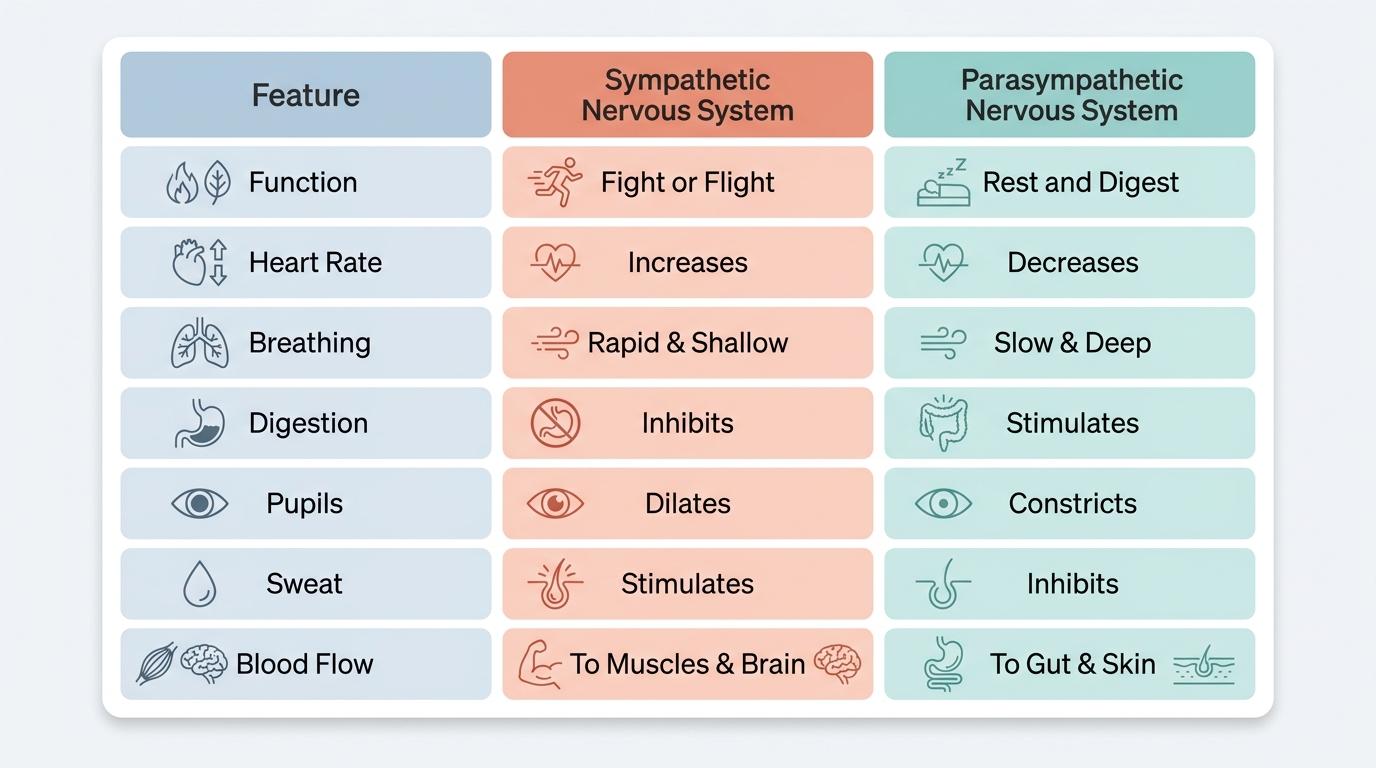
Acupuncture is a therapeutic practice involving the insertion of thin, sterile needles into specific anatomical points to stimulate the nervous system and modulate biological responses. By encouraging physiological shifts from high-stress sympathetic dominance to a parasympathetic state, this approach helps regulate hormonal levels and neurotransmitter activity associated with anxiety.
For individuals managing chronic stress, this transition facilitates a reduction in cortisol and supports a return to emotional equilibrium. This guide examines the physiological mechanisms underlying stress regulation, reviews current clinical research, outlines common treatment protocols, and discusses how this practice integrates with conventional medical care.
How Acupuncture Regulates the Nervous System
The Sympathetic vs. Parasympathetic Balance
A physiological reset through acupuncture is the process of modulating the autonomic nervous system to transition the body from a state of chronic stress (sympathetic dominance) to a state of relaxation and recovery (parasympathetic activation).
This shift is a primary reason why patients find that acupuncture works for stress and anxiety. When the body is under constant pressure, the “fight or flight” (sympathetic) system becomes overactive, leading to elevated cortisol and physical tension. Acupuncture treatment targets specific neural pathways to suppress this overactivity while stimulating the “rest and digest” (parasympathetic) system. According to clinical insights provided by Evidence-Based Acupuncture, this process physically alters the brain’s signaling, helping to lower the heart rate and improve the body’s overall stress response. At PremierMD, we integrate these techniques into our acupuncture for mental health protocols to help patients achieve a more balanced internal state.
The regulation of the nervous system is further supported by the release of key biochemicals:
- Endorphins: Often called the body’s “natural opioids,” these chemicals act as powerful mood elevators and pain relievers.
- Serotonin: This essential neurotransmitter helps regulate sleep, appetite, and emotional stability.
- GABA (Gamma-Aminobutyric Acid): This inhibitory neurotransmitter serves as a “brake” for the brain, reducing the excitability of the nervous system to promote calmness.
| Neurotransmitter | Primary Effect on Mood | Role in Anxiety Management |
| Endorphins | Euphoria and pain relief | Reduces the physical discomfort and tension caused by chronic stress. |
| Serotonin | Emotional stability | Balances mood and improves the quality of restorative sleep. |
| GABA | Relaxation and calm | Quiets “racing thoughts” and lowers the threshold for panic. |
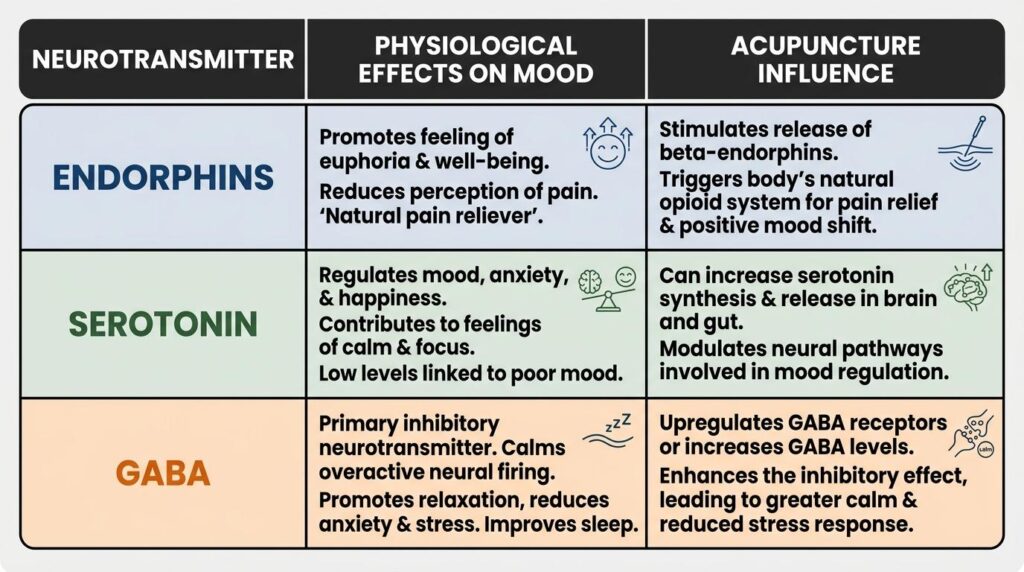
By facilitating the release of these specific signaling molecules, acupuncture provides a biological foundation for sustainable mood stabilization and long-term relief from psychological distress.
The Clinical Effectiveness of Acupuncture for Anxiety Disorders
Acupuncture has been shown to be an effective, evidence-based intervention for reducing the symptoms of stress and anxiety. Extensive clinical research suggests that medical acupuncture can serve as a powerful adjunct to traditional therapies, helping patients achieve emotional balance by directly influencing the body’s neurochemical response to stressors. According to the National Center for Complementary and Integrative Health (NCCIH), acupuncture is increasingly recognized for its role in managing diverse conditions, including those rooted in chronic psychological distress.
Research Findings for Generalized Anxiety Disorder (GAD)
When evaluating treatments for Generalized Anxiety Disorder (GAD), clinical studies often measure success through standardized anxiety scales. Randomized controlled trials have demonstrated that patients receiving acupuncture frequently report a significant decrease in “state anxiety”—the acute feelings of apprehension or tension—compared to those receiving conventional care alone. For many patients at PremierMD, this approach provides a vital non-pharmacological option to manage anxiety symptoms alongside or in place of traditional medication.
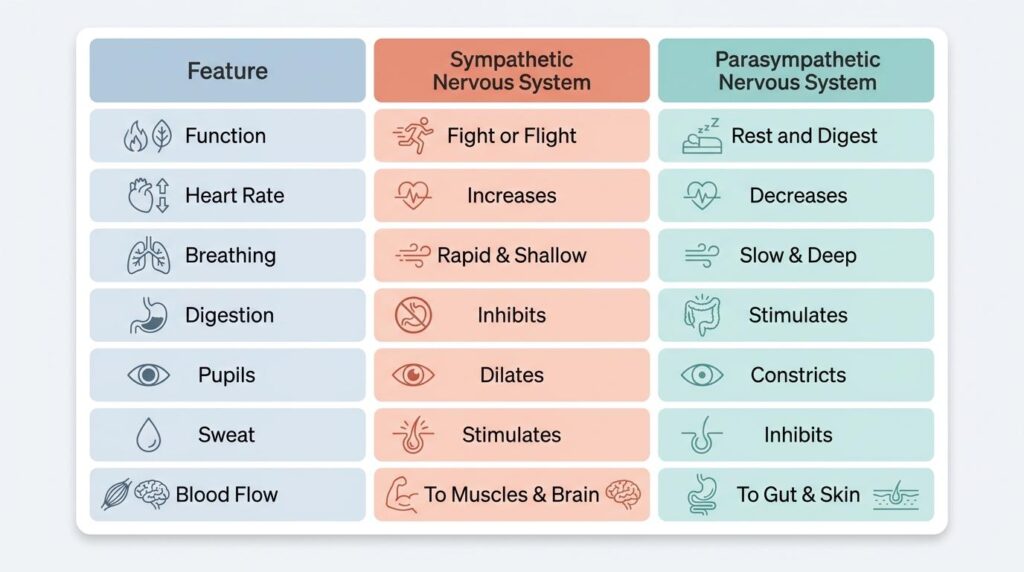
The physiological impact of acupuncture is often measured through its effect on the Hypothalamic-Pituitary-Adrenal (HPA) axis. Clinical research, such as systematic reviews published in the Journal of Korean Medicine and other peer-reviewed journals, has indicated that acupuncture has been shown to lower salivary cortisol levels in individuals experiencing high levels of stress (Source: PMCID PMC6825666). By modulating cortisol—the body’s primary stress hormone—acupuncture may help “reset” the nervous system, shifting the body from a sympathetic (fight-or-flight) state to a parasympathetic (rest-and-digest) state.
Key Clinical Takeaways:
- Cortisol Regulation: Regular sessions may help reduce circulating cortisol, mitigating the long-term physical damage of chronic stress.
- Enhanced Mood: Acupuncture has been linked to the release of endorphins and serotonin, the body’s natural “feel-good” chemicals.
- Reduced Physical Symptoms: Patients often report secondary benefits, such as improved sleep quality and reduced muscle tension associated with mental health concerns.
- Complementary Safety: As a minimally invasive treatment, it can be safely integrated with other family medicine treatments.
These clinical findings underscore why medical acupuncture is a cornerstone of our integrated approach to mental wellness. By addressing the biological markers of stress, we help patients move beyond symptom management toward true physiological recovery.
Transitioning from clinical evidence to practical care, understanding how these sessions are structured can help you prepare for your first visit.
Commonly Used Acupuncture Points for Stress and Anxiety
During an acupuncture session for mental health, your provider selects specific points based on your unique symptoms, such as restlessness, racing thoughts, or physical tension. While hundreds of points exist, a few are renowned for their ability to ground the nervous system and induce a state of “rest and digest.”
The ‘Extra Point’ Yin Tang (Hall of Impression)
Located directly between the inner edges of the eyebrows, Yin Tang—often called the Hall of Impression—is one of the most powerful “extra points” in traditional Chinese medicine. Unlike points located along major meridians, Yin Tang is prized specifically for its ability to calm the mind and relieve frontal headaches associated with stress. Many patients report an immediate sense of clarity and a reduction in “brain fog” or repetitive, looping thoughts once this point is activated.
Specific Points and Physical Locations
Beyond the forehead, several other key points are frequently used to manage anxiety symptoms:
- Shen Men (Spirit Gate): This is a primary auricular (ear) point located in the upper third of the ear’s triangular fossa. It is considered the “gateway” to the soul and is highly effective at regulating the parasympathetic nervous system to lower heart rates and blood pressure.
- Heart 7 (Spirit Gate): Not to be confused with the ear point of the same name, this point is located on the inner wrist crease, specifically on the radial side of the flexor carpi ulnaris tendon (the pinky side). It is traditionally used to treat emotional distress, heart palpitations, and insomnia caused by overactive nerves.
Individualized Needle Placement
At PremierMD, we recognize that stress doesn’t look the same for everyone. While the points listed above are foundational, your practitioner may also include “distal points” on the feet or legs to help anchor your energy or points on the abdomen to address stress-related digestive issues. This individualized approach ensures that we aren’t just treating a general symptom, but rather your specific physiological response to stress.
The “De Qi” Sensation
When the needle reaches the correct depth and contacts the acupuncture point, you may feel a unique sensation known as De Qi. This is often described as a mild dull ache, a heavy tingling, or a warm spreading sensation. It is not a sharp or painful feeling; rather, it is a clinical sign that the point has been “activated” and your body is beginning the process of neurological regulation. Most patients find this sensation deeply relaxing, frequently falling into a light sleep during the remainder of the treatment.
Frequency and Duration of Treatment for Lasting Balance
Initial Consultation and Assessment
The journey toward a calmer mind begins with a comprehensive initial consultation. At PremierMD, our providers evaluate your unique medical history, the severity of your symptoms, and how your body responds to the first few needles. This assessment allows us to create a personalized plan within our acupuncture for mental health program.
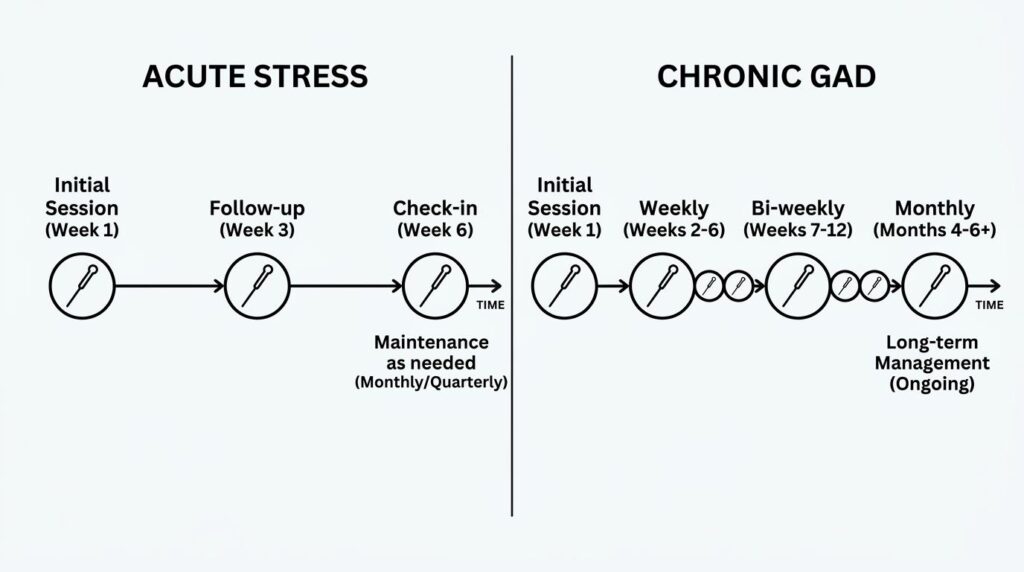
For most patients dealing with moderate stress or Generalized Anxiety Disorder (GAD), our standard practice protocol typically involves an initial series of 6 to 10 sessions. These are often scheduled once or twice a week to build momentum and retrain the nervous system’s response to triggers.
Immediate Effects vs. Long-Term Results
Understanding what to expect from acupuncture for anxiety helps patients stay committed to their treatment plan. The benefits are cumulative, often categorized into two distinct phases:
- The Immediate “Acupuncture Glow”: Many patients experience a sense of deep relaxation, improved sleep quality, and a noticeable reduction in physical tension (like jaw clenching or shoulder tightness) after just one or two sessions.
- Long-Term Emotional Resilience: As you progress through the full 6-10 session series, the goal shifts from temporary relief to long-lasting balance. Over time, your body’s “baseline” stress level lowers, making it easier to navigate daily stressors without spiraling into a state of panic or overwhelm.
Transition: Integrated Care
While acupuncture is a powerful tool for restoring balance, it works best when integrated into a broader health strategy. At PremierMD, we bridge the gap between Eastern tradition and Western medicine, ensuring your mental health journey is supported by board-certified expertise and a holistic perspective on wellness.
Integrating Acupuncture with Conventional Mental Health Care
Acupuncture is most effective when viewed as a collaborative partner to modern medical treatments. Rather than replacing the standards of care, acupuncture for mental health serves as a powerful bridge that addresses the physical manifestations of your emotional state. By combining the precision of Western diagnostics with the systemic balance of Eastern medicine, you can achieve a more comprehensive recovery.
Acupuncture vs. Traditional Talk Therapy
While talk therapy focuses on processing emotions and restructuring cognitive patterns, acupuncture works from the “bottom up” by regulating your nervous system. These two modalities are not in competition; instead, they complement one another. Therapy helps you understand the source of your stress, while acupuncture helps your body physically release the tension and cortisol buildup associated with that stress.
Complementary Use with Medication (SSRIs)
If you are currently taking medications such as Selective Serotonin Reuptake Inhibitors (SSRIs) or other antidepressants, acupuncture can be an invaluable integrative tool. It is important to note that acupuncture is a complementary therapy and not a direct replacement for prescribed medication. Many patients find that acupuncture helps manage the physical side effects of medication, such as fatigue or digestive issues, while providing an additional layer of support for mood stabilization. Always consult with your primary care physician at Premier Health before making any changes to your medication regimen.
Why Practitioners Recommend Integration
Medical professionals increasingly recommend an integrated approach because it targets the root causes of anxiety from multiple angles. Benefits of this combined strategy include:
- Synergistic Results: Combining modalities often leads to faster and more sustainable symptom relief than using one method alone.
- Physical Symptom Management: Acupuncture specifically targets the “fight or flight” response, reducing the heart palpitations and muscle tension that talk therapy may not fully resolve.
- Improved Medication Tolerance: By balancing the body’s internal systems, acupuncture may help you feel more resilient while your body adjusts to conventional treatments.
- Enhanced Self-Regulation: Regular sessions help train your body to return to a state of calm, making it easier for you to apply the coping skills learned in therapy.
Holistic Approach
At Premier Health, our goal is to treat the whole person, not just the diagnosis. By weaving together the best of both worlds, you receive a customized care plan designed to restore your mental and physical equilibrium. This integrated perspective is essential for understanding the clinical evidence behind these treatments.
The Role of Integrative Family Medicine in Emotional Wellness
The Intersection of Primary Care and Mental Health
Physical and emotional health are deeply intertwined, with physiological symptoms often acting as a mirror for internal stressors. In integrative family medicine, we recognize that chronic anxiety does not exist in a vacuum; it actively impacts cardiovascular health, immune function, and endocrine balance. By addressing emotional wellness within a primary care setting, we ensure that mental health is treated with the same clinical rigor as physical ailments, providing a more comprehensive and streamlined path to healing.
While many patients ask, “does acupuncture work for stress and anxiety,” its clinical benefits extend far beyond immediate symptom relief. Within an integrative mental health framework, medical acupuncture serves as a vital bridge between acute intervention and long-term preventive care.
While the immediate effect of an acupuncture session is often a reduction in cortisol and a shift toward parasympathetic dominance (the “rest and digest” state), the ultimate goal in a family medicine context is to stabilize the nervous system. This holistic support ensures that patients are not merely managing recurring symptoms but are building a foundation of physiological resilience. By combining Western diagnostics with evidence-based Eastern modalities, we provide a continuum of care that supports your health through every stage of life, prioritizing long-term wellness over temporary fixes.
Acupuncture for Stress and Anxiety FAQs
How do I find a qualified licensed acupuncturist?
To find a qualified professional, verify that the practitioner is a Licensed Acupuncturist (L.Ac.) and holds certification from the National Certification Commission for Acupuncture and Oriental Medicine (NCCAOM). In many states, medical doctors also practice acupuncture. Checking for these credentials ensures the provider has undergone rigorous clinical training and adheres to strict safety and hygiene standards.
Is acupuncture for stress and anxiety painful?
Most patients find the experience deeply relaxing rather than painful. Acupuncture needles are extremely thin, roughly the width of a human hair. While you may feel a brief sensation or a heavy, dull ache upon insertion, this typically gives way to a profound sense of calm as the nervous system enters a parasympathetic state.
Are there specific types of anxiety that respond better to acupuncture than others?
While acupuncture is effective for general stress, research indicates it is particularly beneficial for Generalized Anxiety Disorder (GAD) and panic-related symptoms. It is also highly effective for situational anxiety, such as stress related to medical procedures or major life changes, because it provides an immediate calming effect on the physiological stress response.
What should I look for in an acupuncturist if I am seeking treatment for generalized anxiety?
Look for a practitioner who takes a comprehensive approach to your health. A qualified acupuncturist should perform a detailed intake that considers your sleep patterns, digestion, and physical symptoms alongside your anxiety. Seeking a provider who works within an integrative family medicine setting can be particularly helpful, as they can coordinate care with your primary physician for a more cohesive treatment plan. Taking these steps ensures your mental health care is both safe and evidence based.
Start Your Journey Toward Emotional Balance
Achieving lasting emotional wellness often requires a multidimensional approach that addresses both the mind and the body. Our team integrates traditional medical expertise with holistic therapies to provide comprehensive care tailored to your unique health profile. If you are ready to explore a natural path toward calm, schedule a consultation with our integrated family medicine team in New Jersey to discover how acupuncture for mental health can help restore your emotional balance and reduce stress.
Leave a Reply